We use a combination of field, laboratory, and bioinformatic methods to better understand ecology and evolution. Most of our research is focused on Appalachian amphibians, especially the lungless salamanders of the family Plethodontidae. Below, you can read a bit more about some of the major themes of our work; for an updated list of our publications, visit Google Scholar.
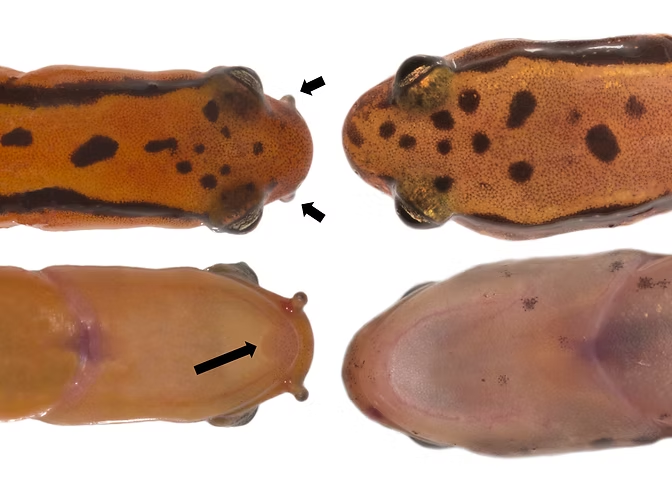
variation in reproductive behavior & morphology
Plethodontid salamanders engage in ritualized courtship and have suites of morphological traits used in these behaviors. Males of some "brook salamanders" (genus Eurycea) exhibit two discrete strategies found within a single population—known as alternative reproductive tactics. We study the origin, maintenance, and consequences of this variation using local fieldwork, laboratory experiments, museum specimens, and genomic data.
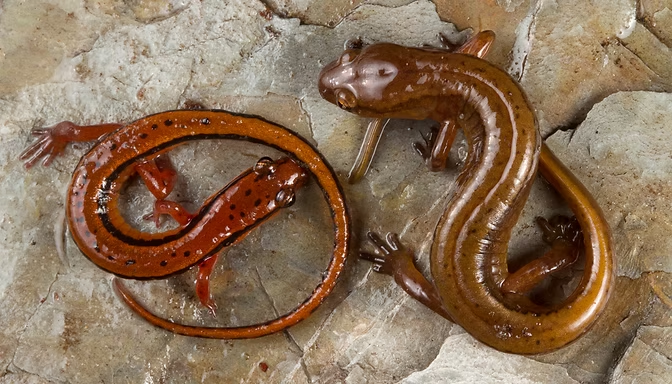
hybridization, phylogeography, & species delimitation
Evolution is complicated. Sometimes speciation happens with continuous gene flow; other times, species that diverged in allopatry hybridize in regions of secondary contact. Appalachian salamanders provide especially compelling models for studying reticulate evolution, and we use genomic data to understand how changing landscapes shape genetic diversity.
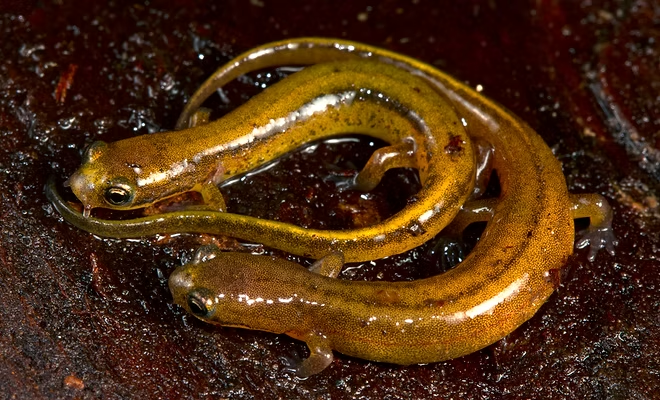
conservation of rare and imperiled species
Effective conservation depends upon good science. We collaborate with conservation biologists at government agencies to provide data on the distribution and status of imperiled Appalachian organisms. This includes field surveys, environmental DNA, and population genomic approaches to estimate gene flow.